Skip to content

Search

Global risk of selection and spread of Plasmodium falciparum histidine-rich protein 2 and 3 gene deletions

Since their first detection in 2010, Plasmodium falciparum malaria parasites lacking the P. falciparum histidine-rich protein 2 gene (pfhrp2) have been observed in 40 of 47 surveyed countries, as documented by the World Health Organization. These genetic deletions reduce detection by the most widely used rapid diagnostic tests, prompting three countries to switch to alternative diagnostics.

A Scoping Review of Digital Interventions Targeting Anxiety in Young Children

Anxiety is a leading mental health concern in childhood. Whilst a range of therapeutic approaches effectively reduce anxiety in young children, several barriers impact their implementation into practice. Digital interventions could help overcome some of these challenges; however, whether these can effectively target anxiety for children with and without Neurodevelopmental Conditions is unknown.

Proteomics confirms immune stabilizing effects of narrowband UVB treatment in patients with clinically isolated syndrome and multiple sclerosis

Multiple sclerosis (MS) demonstrates a latitude gradient in prevalence and severity, implicating ultraviolet B (UVB) exposure and photoimmune mechanisms in disease risk and progression. While narrowband (NB)-UVB phototherapy has long stabilized inflammation in dermatology, its systemic immunomodulatory effects in MS remain incompletely defined.

Internalizing Symptoms in Men: The Role of Masculine Norms, Alexithymia, and Emotion Regulation

Masculine norms influence internalizing problems in men. The processes that explain this association are not yet comprehensively understood. However, there exists a compelling argument to highlight the role of emotional functioning in explaining how conformity to the traditional Western conceptualization of masculine norms confers risk for internalizing problems.

Aspiring athletes managing sport, education, social, and family life: A scoping review

This scoping review considers the experiences of aspiring high school-aged athletes as they navigate the complexities of managing sport, education, social, and family life. The review synthesises existing literature on the decisions, barriers, facilitators, and support systems that influence aspiring athletes' pathways.

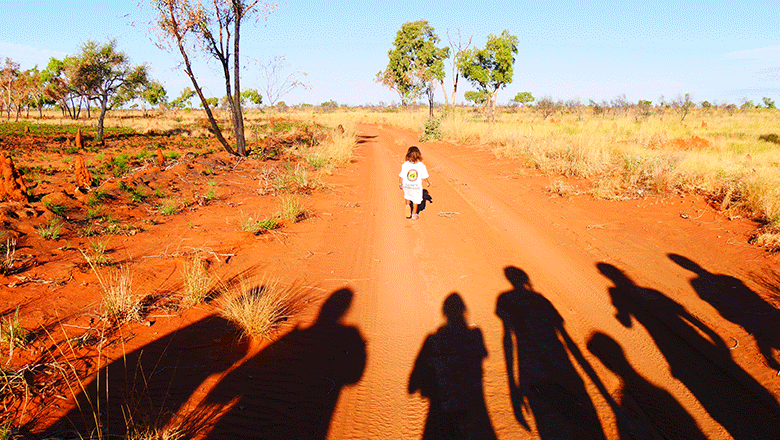
Approaches that support Indigenous children and families in the transition to school: A systematic review

The early years are critical for lifelong wellbeing, with transition to formal school a key period for development. For Indigenous children, this transition provides opportunities to build on cultural strengths and belonging. However, many children face systemic barriers that impact their transition experiences, highlighting a need for culturally safe programs that support Indigenous families during this significant time.

Prevalence of youth type 2 diabetes in global Indigenous populations: a systematic review

We aimed to synthesise global prevalence estimates of type 2 diabetes among Indigenous youth aged under 25 years, and examine age- and gender-specific differences and secular trends.

Change in Diet Quality and Dietary Intake From Pregnancy to 1-Year Postpartum: A Longitudinal Analysis in Australian Women

This longitudinal analysis in Australian women evaluated change in diet quality and food and nutrient intakes from the third trimester of pregnancy to 1-year postpartum with comparison to national nutrition recommendations. Associations between diet quality, sociodemographic and health characteristics were also investigated.

Acceptability, feasibility, and program outcomes of an equity-focused, adapted community-based healthy lifestyle program for children, young people, and their families

International guidelines recommend multidisciplinary intervention programs for addressing childhood obesity. In Western Australia, community-based healthy lifestyle programs for children and young people are insufficient for demand, especially for those over-represented in obesity statistics relating to prevalence. This protocol outlines the implementation and evaluation of an adapted, evidenced, community-based program in Perth, Western Australia.

Atopy-related immune profiles are subject to genetic influence as evaluated using school-aged twin pairs

The interaction of genetic and environmental contributions to immunological traits and their association with atopic disease remain unclear. Flow cytometry and in vitro cytokine responses were used to characterize immune profiles from 93 school-aged twin pairs. Using an established twin pair analytical strategy, the genetic and environmental influences on immunological traits were evaluated, along with their association with atopy. Our findings suggest strong genetic influence on several traits, particularly B cell abundance. In contrast, cytokine responses from in vitro stimulations appeared mainly shaped by environmental exposures.