
Search

The Wal-yan Respiratory Research Centre is thrilled to see three researchers awarded prestigious Medical Research Future Fund (MRFF) Chronic Respiratory Conditions grants to improve lung health in children.

Five researchers from The Kids Research Institute Australia have been awarded three-year fellowships with the aim of keeping more WA-based PhD graduates involved in child health research.
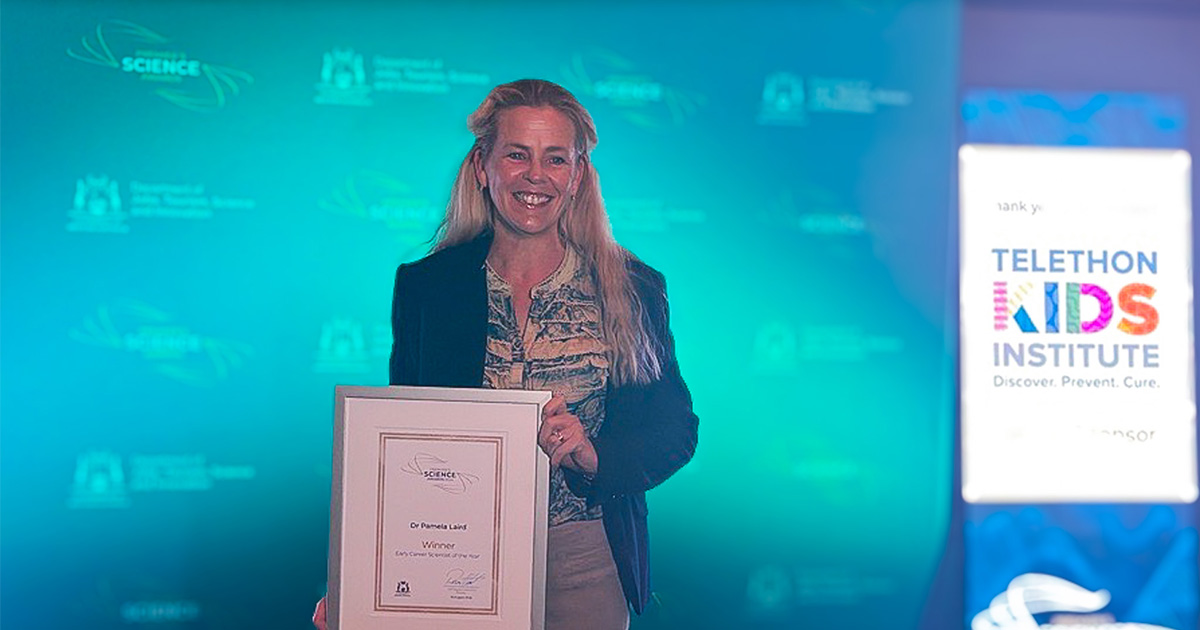
Congratulations to respiratory health researcher and clinician Dr Pam Laird, who was last night named joint winner of Early Career Scientist of the Year at the 2024 Premier’s Science Awards.

Eight The Kids Research Institute Australia-led projects will benefit from the latest round of WA Child Research Fund (WACRF) grants, announced this week by Medical Research Minister Stephen Dawson.
Burkholderia cepacia complex causes life-threatening respiratory infections. Here, a bacteriophage with activity against B. cenocepacia was isolated from wastewater. It has a genome size of 70,144 bp and has the taxonomic classification Irusalimvirus. It has no genes associated with lysogeny, bacterial resistance, or virulence.
To provide updated evidence-based clinical guidance in the management of infants with bronchiolitis presenting to emergency departments (EDs), general paediatric, or intensive care units (ICUs) in Australia and Aotearoa New Zealand (AoNZ) following the first publication in 2016.
The identification of a COPD etiotype associated with preterm birth (COPD-developmental) has expedited calls for intervention strategies that may improve health outcomes for survivors of preterm birth (<37 weeks' gestation). Pulmonary-rehabilitation style training interventions achieve physiological and symptom improvement in older people with COPD, but whether similar training interventions are suitable for young people is unclear. We sought to understand the perceived need and requirements of an exercise training intervention for children, adolescents and adults born preterm.
Describe the physiotherapy interventions provided to children with cerebral palsy at risk of respiratory illness and determine criteria for safe in-home treatment.
Survivors of preterm birth (<37 weeks' gestation) have low peak oxygen uptake, a global measure of aerobic fitness and an established predictor of increased morbidity and mortality. However, little is known about other cardiopulmonary outcome measures in this population. We addressed the hypothesis that preterm birth is associated with abnormal respiratory, cardiovascular and metabolic responses to exercise, as assessed by cardiopulmonary exercise testing, via a systematic review and meta-analysis.
Understand how bronchopulmonary dysplasia (BPD) and antenatal and postnatal factors influence diaphragmatic functional effectiveness in very preterm infants.