
Search
This narrative review article summarises the current evidence on environmental exposures before surgery. There is emerging evidence suggesting that environmental exposures before surgery, namely exposure to air pollution and allergenic pollen, may significantly influence the risk of these events occurring.
Little evidence exists on the postoperative trajectory after paediatric orthopaedic surgery. Pain and behavioural disturbance can have short- and long-term impacts on children and their families. An improved understanding of procedure-specific postoperative trajectories can enhance recovery. The primary outcome was to examine the duration and severity of postoperative pain experienced by children undergoing 10 commonly performed orthopaedic procedures.
Obstructive sleep apnoea (OSA) has been thought to increase the risk of respiratory depression from opioids. The primary aim of this study was to assess whether preoperative hypoxaemia by sleep study pulse oximetry imparts greater opioid sensitivity.
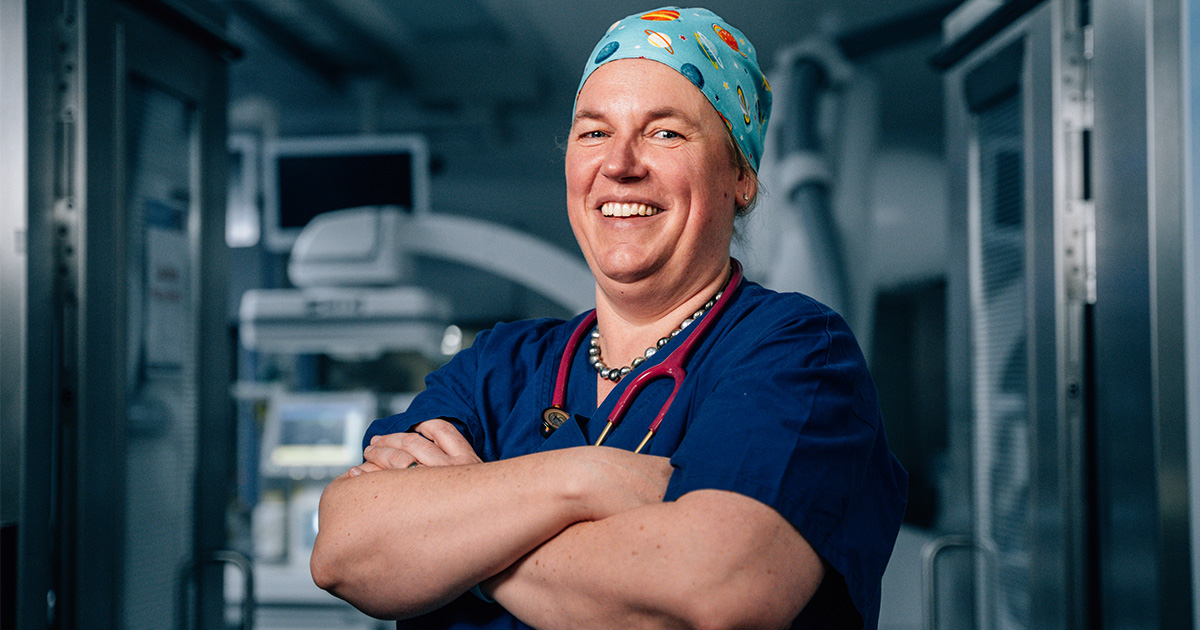
Congratulations to trailblazing Western Australian paediatric anaesthetist and researcher Professor Britta Regli-von Ungern-Sternberg, who has been awarded a prestigious Prime Minister’s Prize for Science for globally influential research that has made surgery and recovery safer for babies and children.
Perth researchers who were involved in an international study which examined two different techniques used to intubate newborns and young babies during surgery expect the findings to lead to a change in global practice.
Children experience significant pain following extracapsular tonsillectomy surgery, and while opioids are often prescribed to treat this, clinicians may be wary of their adverse side effects, leading to variation in practice. There is a need for improved post-tonsillectomy pain management in children.
Processed electroencephalography (EEG) indices used to guide anesthetic dosing in adults are not validated in young infants. Raw EEG can be processed mathematically, yielding quantitative EEG parameters (qEEG). We hypothesized that machine learning combined with qEEG can accurately classify expired sevoflurane concentrations in young infants. Knowledge from this may contribute to development of future infant-specific EEG algorithms.
The current research landscape has become increasingly competitive with approximately 35% of submitted manuscripts accepted for publication by peer-review journals. It is known that studies with certain 'favourable characteristics' have an increased likelihood of acceptance for publication, such as prospective study design, multiple sites, and notable authors.
Tracheostomy tubes act as foreign bodies, predisposing the surrounding airway to respiratory infections. Initial treatment for infections is topical - nebulized tobramycin - although guidelines for standardized treatment are lacking.
The Trial Remifentanil DEXmedetomidine trial aimed to determine if, in children < 2 years old, low-dose sevoflurane/dexmedetomidine/remifentanil anesthesia is superior to standard dose sevoflurane anesthesia in terms of global cognitive function at 3 years of age.