
Search
High frequency ventilation (HFV) in neonates has been in use for over forty years. Some early HFV ventilators are no longer available, but high frequency oscillatory ventilation (HFOV) and jet ventilators (HFJV) continue to be commonly employed. Advanced HFOV models available outside of the United States are much quieter and easier to use, and are available as options on many conventional ventilators, providing important improvements such as tidal volume measurement and targeting.
Sildenafil is used to treat pulmonary hypertension in neonatal intensive care unit (NICU) settings. As multiple intravenous (IV) medications are co-administered in NICU settings, we sought to investigate the physicochemical compatibility of sildenafil with a range of IV drugs.
First Nations Peoples endure disproportionate rates of stillbirth compared with non-First Nations Peoples. Previous interventions have aimed at reducing stillbirth in First Nations Peoples and providing better bereavement care without necessarily understanding the perceptions, knowledge and beliefs that could influence the design of the intervention and implementation.
The stillbirth rate among Aboriginal and Torres Strait Islander women and communities in Australia is around double that of non-Indigenous women. While the development of effective prevention strategies during pregnancy and improving care following stillbirth for women and families in communities has become a national priority, there has been limited progress in stillbirth disparities. With community permission, this study aimed to gain a better understanding of community experiences, perceptions, and priorities around stillbirth.
Medications are commonly used during pregnancy to manage pre-existing conditions and conditions that arise during pregnancy. However, not all medications are safe to use in pregnancy. This study utilized privacy-preserving record linkage (PPRL) to examine medications dispensed under the national Pharmaceutical Benefits Scheme (PBS) to pregnant women in Western Australia (WA) overall and by medication safety category.
Positive maternal mental health during the perinatal period contributes to general well-being and positive emotional bonds with the child, encouraging an optimal developmental trajectory. Online interventions to enhance maternal well-being and develop coping skills, such as meditation-based interventions, can be a low-cost way to improve mother and child outcomes.
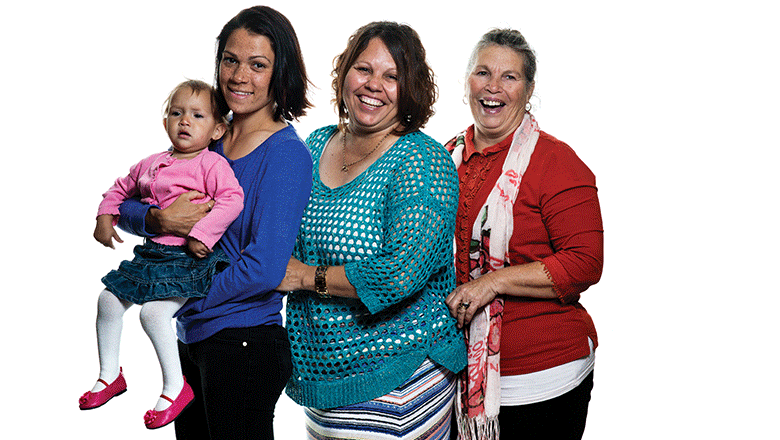
A study by researchers at The Kids Research Institute Australia has found Aboriginal mothers are at a significantly greater risk of preventable death than other Australia
Pregnant women are at higher risk of contracting listeriosis, which can lead to serious perinatal complications. This study evaluated associations between Listeria monocytogenes exposure, infant perinatal outcomes, and hospital resource use in a cohort of 1604 Australian mother-infant dyads.
The long-term consequences of early adverse exposures are well known but is becoming clear that early means not just in pregnancy but also in at least the two preceding generations. Furthermore, there are new existential threats to long term respiratory health, some of which have been presented at the INSPiRED meeting in Bologna and are reviewed in this manuscript.
Rheumatic heart disease (RHD) is the acquired autoimmune heart valve damage resulting from untreated infection with the Streptococcus pyogenes bacterium, which affects people experiencing socioeconomic disadvantage globally. This study measured RHD-associated major adverse cardiovascular events (MACE) and the increased risk associated with pregnancy among women diagnosed with RHD.