
Search
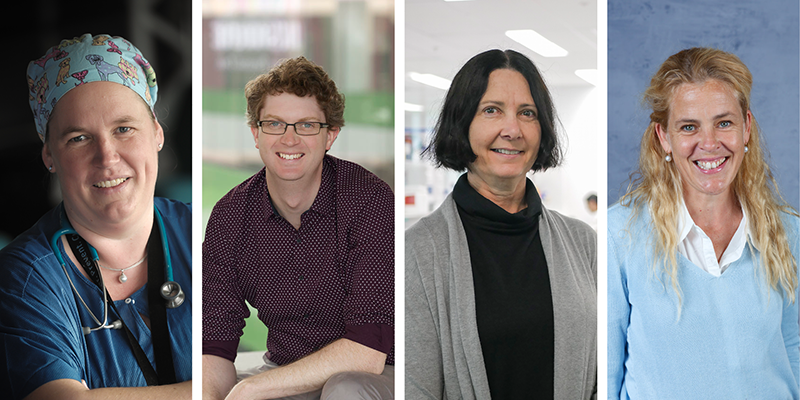
A research team dedicated to making anaesthesia and surgery safer and more comfortable for babies and children has been awarded an inaugural Byron Kakulas Medal by WA’s Perron Institute.
Research projects sharing in a $2.1 million funding boost will seek to translate research findings into changes that benefit patients and help the health system run more efficiently.

A The Kids Research Institute Australia ear health researcher has received a prestigious national fellowship to support her search for new therapies to improve the lives of kids who suffer repeat middle ear infections.
Critical Events in Anaesthetised Kids undergoing Tracheal Intubation (CRICKET) is a prospective, international multicentre observational study with the objective of capturing, assessing, and analysing critical events associated with tracheal intubation in children.
Head-mounted devices (HMDs) have been explored in anaesthesia education for their unique ability to have head-tracked immersive simulations adaptable to diverse clinical scenarios. This scoping review examines how HMD-based augmented or virtual reality enhances anaesthetic skill learning in clinicians, trainees, and students.
Sometimes, there is an urgent need to administer inhaled adrenaline to children, awake, sedated or anaesthetised to treat asthma, bronchospasm, croup, and suspected laryngeal/pharyngeal oedema or stridor, which can become severe or even life-threatening. To better inform emergency dosing and administration guidelines, we aimed to quantify the amount of adrenaline delivered for inhalation from a nebuliser, in a simulated experimental delivery set-up for spontaneously breathing children and adults, either via an anaesthetic face mask, a Laryngeal Mask Airway or an Endotracheal tube.
The administration of inhaled antibiotics to patients with upper or lower respiratory infections is sometimes conducted via a tracheostomy airway. However, precise dosing via this route remains uncertain, especially in spontaneously breathing paediatric patients.
Parents and caregivers play a critical role in the care of their child peri-operatively. Our team undertook previous research with parents/carers, which identified Australian parents' top 10 research priorities for paediatric anaesthesia and peri-operative medicine.
Peri-operative respiratory adverse events remain a major cause of morbidity and mortality in children undergoing general anaesthesia; those with asthma are at higher risk. The aim of this feasibility study was to determine whether pre-operative measurements of fractional exhaled nitric oxide and the forced oscillation technique are feasible in children, and to explore whether these measurements can predict peri-operative respiratory adverse events.
Lidocaine is widely used in pediatric anesthesia for airway topicalization to modulate undesirable airway and circulatory reflexes, yet its effectiveness remains unclear. Therefore, we aimed to perform a meta-analysis evaluating the impact of topical lidocaine on respiratory adverse events in children undergoing airway management.