
Search

Medtronic has issued an urgent medical device recall of their MiniMed infusion sets for potentially over-delivering insulin.

Respiratory Syncytial Virus (RSV) is a year-round threat to the health of babies and young children, and one of the leading causes of infant hospitalisation in Australia. It is highly contagious and can cause anything from mild cold-like symptoms to severe lung infections such as bronchiolitis and pneumonia. For n

The Children's Diabetes Centre values the importance of community members having a say by giving feedback and guidance on issues important to them.

In honour of International Day of Women and Girls in Science, we celebrate women in STEM and their incredible contributions to the field, aiming to inspire the next generation of female scientists.

One step at a time … that’s the message Canadian Sebastien Sasseville wants kids living with Type 1 Diabetes to know when he talks about his T1D journey.
Development of vaccines to prevent disease and death from Streptococcus pneumoniae, and nontypeable Haemophilus influenzae (NTHi), the main pathogens that cause otitis media, pneumonia, meningitis and sepsis, are a global priority.
Studies examining associations of early-life cat and dog ownership with childhood asthma have reported inconsistent results. Several factors could explain these inconsistencies, including type of pet, timing, and degree of exposure. Our aim was to study associations of early-life cat and dog ownership with asthma in school-aged children, including the role of type (cat vs dog), timing (never, prenatal, or early childhood), and degree of ownership (number of pets owned), and the role of allergic sensitization.
Cystic fibrosis (CF) is characterized by small airway disease; but central airways may also be affected. We hypothesized that airway resistance estimated from computational fluid dynamic (CFD) methodology in infants with CF was higher than controls and that early airway inflammation in infants with CF is associated with airway resistance.
In asthma, a significant portion of the interaction between genetics and environment occurs through microbiota. The proposed mechanisms behind this interaction are complex and at times contradictory. This review covers recent developments in our understanding of this interaction: the "microbial hypothesis" and the "farm effect"; the role of endotoxin and genetic variation in pattern recognition systems; the interaction with allergen exposure; the additional involvement of host gut and airway microbiota; the role of viral respiratory infections in interaction with the 17q21 and CDHR3 genetic loci; and the importance of in utero and early-life timing of exposures.

Having diabetes is hard and that's why our researchers are working tirelessly to develop more effective therapies to improve the lives of those living with T1D
Small volume assays are required for large-scale research studies and in particular paediatric trials, where multiple measures are required from a single sample. Fluorescent bead-based technology (Bioplex/Luminex) allows high through-put and simultaneous quantification of multiple analytes in a single test. This technology uses sets of microspheres, each with a unique spectral address that can be coated with a different antigen of interest.
To investigate the relationship between time spent outdoors, at particular ages in childhood and adolescence, and myopia status in young adulthood using serum 25-hydroxyvitamin D [25(OH)D] concentration as a biomarker of time spent outdoors. Participants of the Raine Study Generation 2 cohort had 25(OH)D concentrations measured at the 6-, 14-, 17- and 20-year follow-ups. Participants underwent cycloplegic autorefraction at age 20 years, and myopia was defined as a mean spherical equivalent -0.50 dioptres or more myopic. Logistic regression was used to analyse the association between risk of myopia at age 20 years and age-specific 25(OH)D concentrations. Linear mixed-effects models were used to analyse trajectory of 25(OH)D concentrations from 6 to 20 years.
Maternal immunization with pneumococcal conjugate vaccine (PCV) may protect young infants in high-risk settings against the high risk of pneumococcal infections in early life. The aim of this study was to determine the safety and immunogenicity of 13-valent PCV (PCV13) in healthy women of childbearing age in PNG.
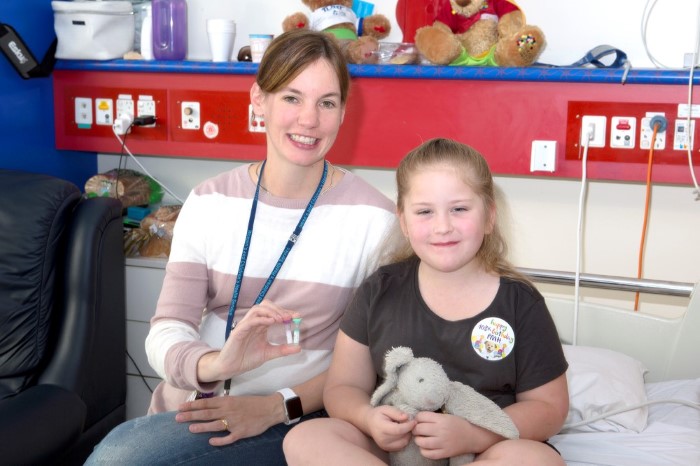
Kayla Hesketh is the first patient recruited to a new study being carried out by the Children’s Diabetes Centre and University Children’s Hospital Basel.
Although adolescent dietary patterns tend to be of poor quality, it is unclear whether dietary patterns established in adolescence persist into adulthood. We examined trajectories across adolescence and early adulthood for 2 major dietary patterns and their associations with childhood and parental factors. Using data from the Western Australian Pregnancy Cohort (Raine Study), intakes of 38 food groups were estimated at ages 14, 17, 20 and 22 y in 1414 participants using evaluated FFQs.

Teens with diabetes may sometimes feel alone and even embarrassed about their diabetes. We asked Professor Donna Cross, for her tips for being a good friend.

We’d love to hear your feedback on our website and newsletter so we can make it more informative and interesting for WA’s Type 1 Diabetes community.

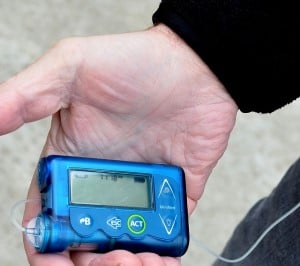
Diabetes WA is providing free ‘start-up’ information and training sessions for families new to CGM, in partnership with PMH.