
Search
Having a preterm (<37 weeks' gestation) birth may increase a woman's risk of early mortality. Aboriginal and Torres Strait Islander women have higher preterm birth and mortality rates compared with other Australian women.
Laboratory models provide an important tool in helping to understand the cellular and molecular drivers of respiratory disease. Many animal models exist that model the neonatal outcomes of preterm birth.
Docosahexaenoic acid (DHA) is a component of neural tissue. Because its accretion into the brain is greatest during the final trimester of pregnancy, infants born before 29 weeks' gestation do not receive the normal supply of DHA. The effect of this deficiency on subsequent cognitive development is not well understood.
Preterm birth and subsequent neonatal ventilatory treatment disrupts development of the hypoxic ventilatory response (HVR). An attenuated HVR has been identified in preterm neonates, however it is unknown whether the attenuation persists into the second year of life.
Abnormalities of the airway smooth muscle (ASM) layer in asthma may develop before birth. We hypothesize that antenatal inflammation causes physiological abnormalities of the ASM that predisposes asthma. This study determined the short-term effects of antenatal inflammation on the developing ASM.
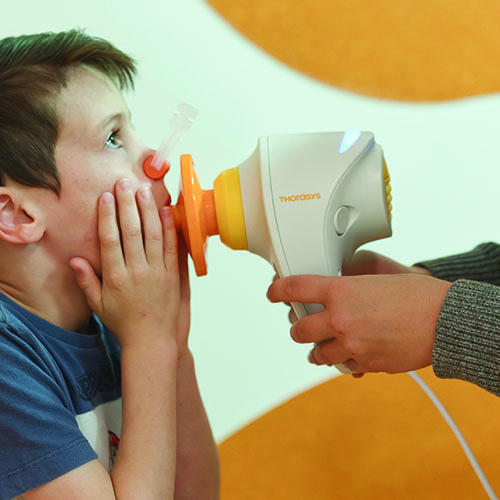
A new study is helping to identify treatment options to improve the lung function of premature babies, after it was determined survivors of preterm birth were at risk of declining lung health.
Preterm birth is associated with lifelong respiratory sequelae, yet our understanding of lung function trajectories across the lifespan remains limited. We aimed to identify patterns of spirometry development from childhood to early adulthood in survivors of very preterm birth using novel data-driven methods.
Limited evidence suggests that airway epithelial structure and function is disrupted in very preterm infants; however, the epithelial morphology and physiology has not been well characterised following discharge from neonatal intensive care. This study aimed to characterise the nasal airway epithelium from 1-year-old survivors of very preterm birth.
To describe writhing General Movements Assessment (GMA) classification and General Movement Optimality Score-Revised (GMOS-R) profiles in the general population; to explore relationships between GMOS-R scores and GMA classification, age of assessment and infant socio-demographic factors; and to establish the inter-rater reproducibility of writhing age GMA classification and GMOS-R.
Since the first description of bronchopulmonary dysplasia (BPD), multiple definitions to diagnose BPD and its grading have been published. Several studies have compared the predictive performance of these definitions for long-term outcomes. The objective was to identify the BPD definition with the optimal predictive performance for long-term respiratory and neurological outcomes in preterm infants.