
Search

Western Australian kids will have access to a needle-free nasal flu vaccine for the first time in 2026 as part of a new initiative to boost vaccination rates against the life-threatening virus.

Whooping Cough Day in 2025 has a special significance to Catherine Hughes AM and her family - it marks a decade of dedication to vaccine advocacy after the loss of their four-week-old baby son Riley in 2015.
Maternal influenza and pertussis vaccination is an important strategy to reduce morbidity and mortality in infants. Previous vaccine safety studies have mostly focused on the association between maternal vaccination and fetal death.
Invasive mould infection (IMI) is a major cause of morbidity and mortality in immunocompromised children. Outcomes for paediatric patients with IMI remain poor, due in part to the limitations of available diagnostic tools and therapeutic agents.
Rates of several vaccine preventable diseases, and associated hospitalisation, are higher among Aboriginal and/or Torres Strait Islander children than non-Indigenous children. Western Australia has among the lowest childhood vaccine coverage in Australia, particularly among Aboriginal and/or Torres Strait Islander children. Delayed vaccination is also more common in this population. This project aimed to understand the barriers and facilitators to vaccine uptake and timeliness among Aboriginal and/or Torres Strait Islander children aged under five years in Boorloo (Perth).
Staphylococcus aureus bacteremia (SAB) is the most common cause of childhood sepsis contributing to pediatric intensive care unit admission. The cost of adult SAB hospitalization is well described globally, but limited costing information is available for children. To bridge this knowledge gap, we investigated the cost of hospitalization in children with SAB in Australia.
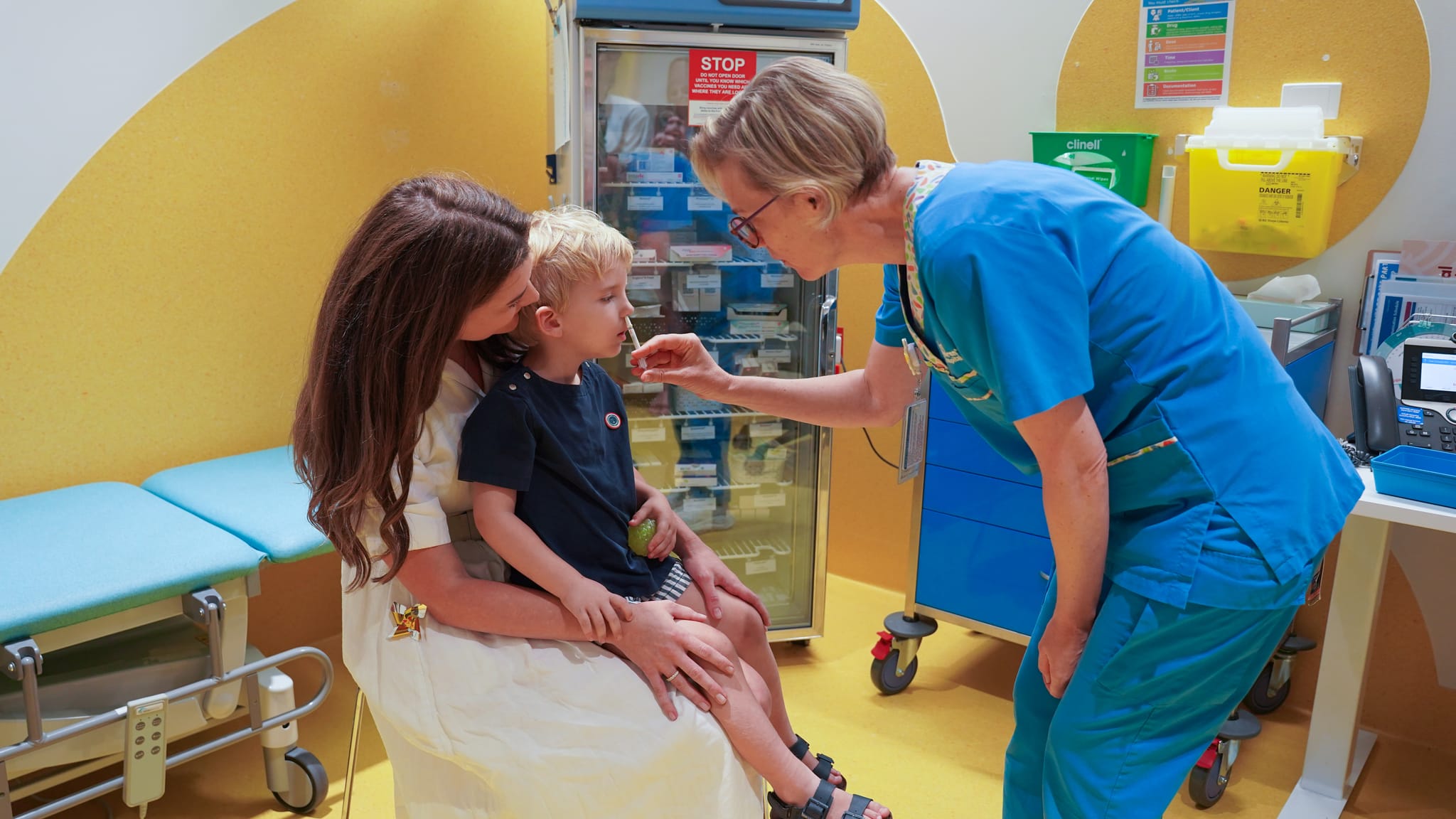
Researchers at The Kids Research Institute Australia hope an Australian-first nasal spray vaccine for two to 11-year-olds will boost flu vaccination this winter.
The estimated effectiveness of SMS (short message service) reminders for improving childhood vaccine coverage and timeliness has varied in previous studies. The observed heterogeneity in effectiveness may be explained in part by variation in reminder content or timing of the reminder relative to the vaccine schedule date. We sought to evaluate the effectiveness of a range of SMS reminders of varied content and timing for improving on-time childhood vaccination.
Although uncommon, invasive meningococcal disease (IMD) results in death in 5%-10% of cases in healthy children and adolescents. This study aimed to examine demographics, clinical presentation, treatment and outcomes of Australian children hospitalized with IMD during the introduction of the meningococcal vaccine program, overall and by serogroup/disease severity.
Pneumococcal conjugate vaccine (PCV) prevents pneumococcal disease and pneumonia, but indirect effects are poorly understood in low-coverage, high-burden settings like Papua New Guinea (PNG). PNG introduced 13-valent PCV (PCV13) in 2014. We aimed to assess direct and indirect effectiveness of PCV13 against vaccine-type pneumococcal carriage among children with pneumonia or suspected meningitis in PNG