
Search
Osteoclasts are important regulators of bone remodeling, with an established role in maintaining skeletal homeostasis. The emergence of osteoimmunology has identified osteoclasts as key players in the immune system. In particular, osteoclasts can initiate bi-directional crosstalk mechanisms with hematopoietic stem cells and various immune cells, such as T cells, B cells and NK cells, to influence hematopoiesis and inflammatory response.
The success of cancer immunotherapies has highlighted the importance of monitoring the anti-tumour T cell response. Patients with mesothelioma frequently present with a malignant pleural effusion (MPE) that is commonly drained regularly to alleviate symptoms. As MPE contains tumour cells, T cells and cytokines, it provides a unique opportunity to sample immune events at the tumour site.
Gliomas are the most common type of malignant primary central nervous system (CNS) tumors, resulting in significant morbidity and mortality in children and adolescent and young adult (AYA) patients. The discovery of mutations in isocitrate dehydrogenase (IDH) genes has dramatically changed the classification and understanding of gliomas. IDH mutant gliomas have distinct clinical, pathological, and molecular features including a favorable prognosis and response to therapy compared to their wildtype counterparts.
Citation: Sek K, Chen AXY, Cole T, Armitage JD, Tong J, ……… Waithman J, Parish IA, et al. Tumor site-directed A1R expression enhances CAR T cell
Approximately 770 children are diagnosed with cancer in Australia every year. Research has explored their experiences and developed recommendations for improving support provided to families. These have included the provision of psychology services, improved communication between healthcare professionals and parents, and increased information for families.
An in-depth investigation of gene regulation and cell populations at sites of fetal blood-cell production provides clues as to why children with Down’s syndrome are predisposed to developing leukaemia.
Vincristine sulphate, a microtubule inhibitor, is used extensively in veterinary oncology for treating lymphoma. Neutropenia during multiagent protocols is a common reason for treatment delay and reduced dose intensity. This study evaluated toxicities associated with treating systemically well neutropenic lymphoma patients with vincristine.
W. Joost Ben Lizeth Rachael Tao Omar Lesterhuis Wylie Orozco Morales Zemek Wang Elaskalani BSc PhD BSc, MSc, PhD BSc (Hons), PhD PhD BSc, MSc, PhD
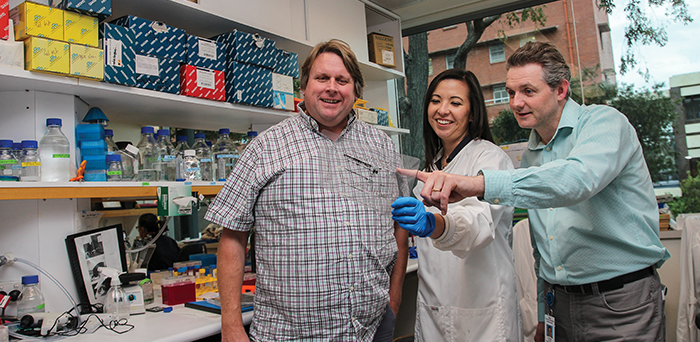
In the field of cancer research, lobbying efforts by the The Kids Cancer Centre have contributed to major initiatives including Australia’s first personalised medicine program for children with high-risk cancer, and a mission to boost survival rates in brain cancer patients.

Michelle Pianta knew deep down something was very wrong with her seven-and-a-half month old son Jackson as she waited at Bunbury Hospital for his blood results.