Search
Evidence suggests that individuals with autism spectrum disorder have increased rates of co-occurring psychosis and/or bipolar disorder. Considering the peak age of onset for psychosis and bipolar disorder occurs in adulthood, we investigated the co-occurrence of these disorders in adults with autism.
The diagnostic experiences of autistic adults in New Zealand have not been investigated and little is known globally about autistic adults' satisfaction with the autism diagnostic process. This study describes the diagnostic experiences of 70 autistic adults living in New Zealand and explores how these experiences are related to satisfaction during three stages of the diagnostic process. The results show that autistic adults were reasonably satisfied with the early query and diagnostic assessment stages, but were dissatisfied with the post-diagnostic support stage, with significant unmet needs. Dissatisfaction during the post-diagnostic support stage was also related to satisfaction during previous stages and poor coordination of supports. Suggestions are made on how to improve the autism diagnostic pathway for autistic adults in New Zealand.
Autism spectrum disorders are complex, with a strong genetic basis. Genetic research in autism spectrum disorders is limited by the fact that these disorders are largely heterogeneous so that patients are variable in their clinical presentations. To address this limitation, we investigated the genetics of individual dimensions of the autism spectrum disorder phenotypes, or autistic-like traits. These autistic-like traits are continuous variations in autistic behaviours that occur in the general population.
The current study aimed to provide a comprehensive appraisal of the current evidence on the effectiveness of Pivotal Response Training (PRT) for individuals with autism spectrum disorder (ASD) and to explore predictors of treatment response.
Social motivation is posited as a key factor in the expression of the autism phenotype. However, lack of precision in both conceptualization and measurement has impeded a thorough understanding of its diverse presentation and associated outcomes. This study addresses this gap by identifying subgroups of autism characterized by deficits in distinct facets of social motivation, relative to normative benchmarks.
The aim of this study was to investigate the influence of children's autism characteristics, sensory profiles and feeding difficulties on caregiver-reported impact at mealtimes.
The MINERvA Network will allow more accurate and precise determination of the contributions of familial and environmental factors to the etiology of autism.
Measures of autistic traits are only useful – for pre-diagnostic screening, exploring individual differences, and gaining personal insight – if they efficiently and accurately assess autism as currently conceptualised while maintaining psychometric validity across different demographic groups. We recruited 1322 autistic and 1279 non-autistic adults who varied in autism status (non-autistic, diagnosed autistic, self-identifying autistic) and gender (cisgender men, cisgender women, gender diverse) to assess the psychometric properties of the Comprehensive Autistic Trait Inventory, a recently developed measure of autistic traits that examines six trait domains using 42 self-report statements.
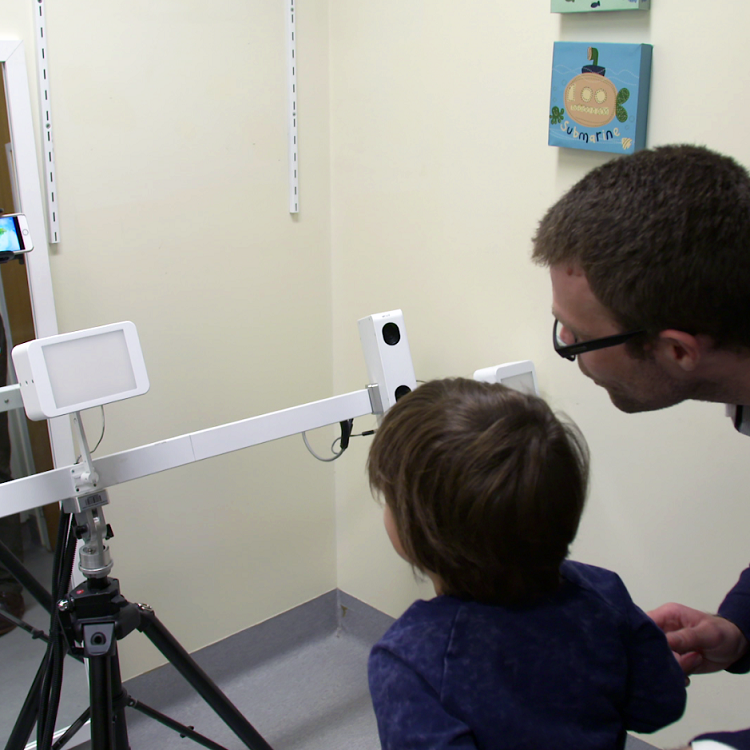
Eye-tracking could expedite autism identification/diagnosis through standardisation and objectivity. We tested whether Gazefinder autism assessment, with Classification Algorithm derived from gaze fixation durations, would have good accuracy (area under the curve [AUC] ≥ 0.80) to differentiate 2-4-year-old autistic from non-autistic children.
Autism early intervention research has indicated a research-to-practice gap, including continued use of practices with inadequate research support, and insufficient use of empirically supported practices. The present study explored the processes and mechanisms through which providers working with young children on the autism spectrum learn, select, and implement the various practices in their clinical repertoires.