
Search
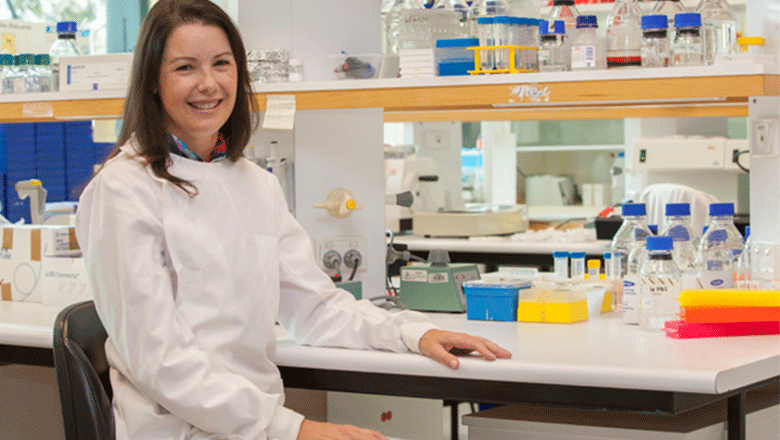
When Ingrid Laing was born, the outlook for kids with cystic fibrosis was bleak. Her parents were told she might make it to 20 if she was lucky.

We are looking for 6 new members to join our Child and Adolescent Cystic Fibrosis Consumer Reference Group of WA
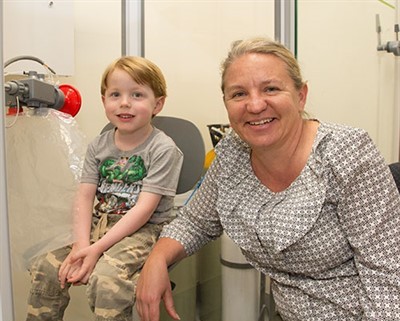
That's why Melissa has signed up her four year old healthy son Odin for a study at Perth's The Kids Research Institute Australia that will help kids with cystic fibrosis.
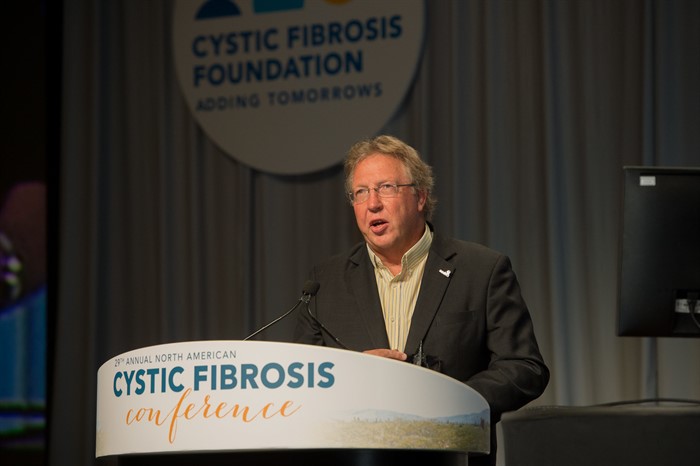
Professor Stephen Stick has been awarded the prestigious Richard C. Talamo Distinguished Clinical Achievement Award from the US Cystic Fibrosis Foundation.
Researchers at Perth's Telethon Institute are one step closer to preventing serious lung disease which is the main cause of suffering in cystic fibrosis.
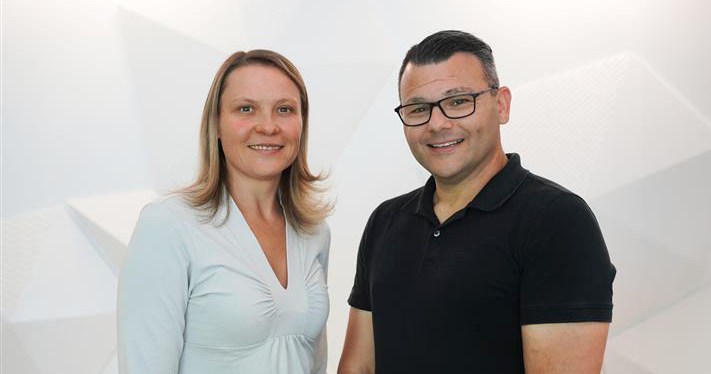
Two researchers from The Kids Research Institute Australia’s Wal-yan Respiratory Research Centre have secured lucrative fellowships to advance cutting-edge phage therapy research for people living with cystic fibrosis (CF).
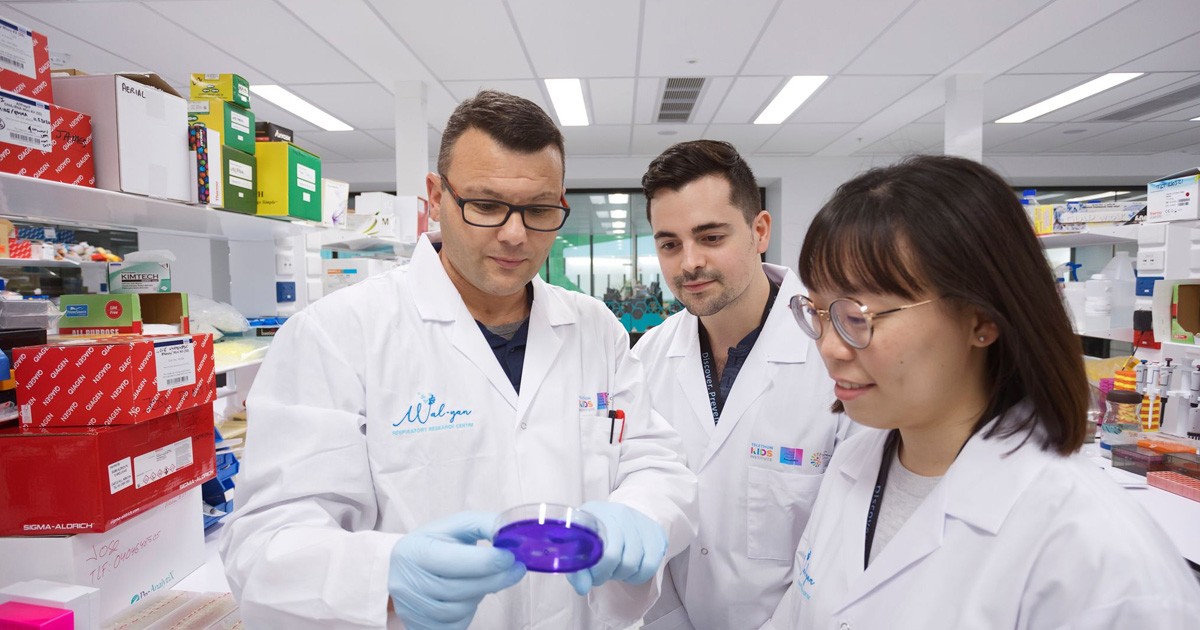
A $350,000 Cure4 Cystic Fibrosis grant is set to propel the Wal-yan Respiratory Research Centre’s Phage WA program forward, supercharging its fight against antimicrobial resistant (AMR) lung infections in people with Cystic Fibrosis (CF) using cutting-edge phage therapy.
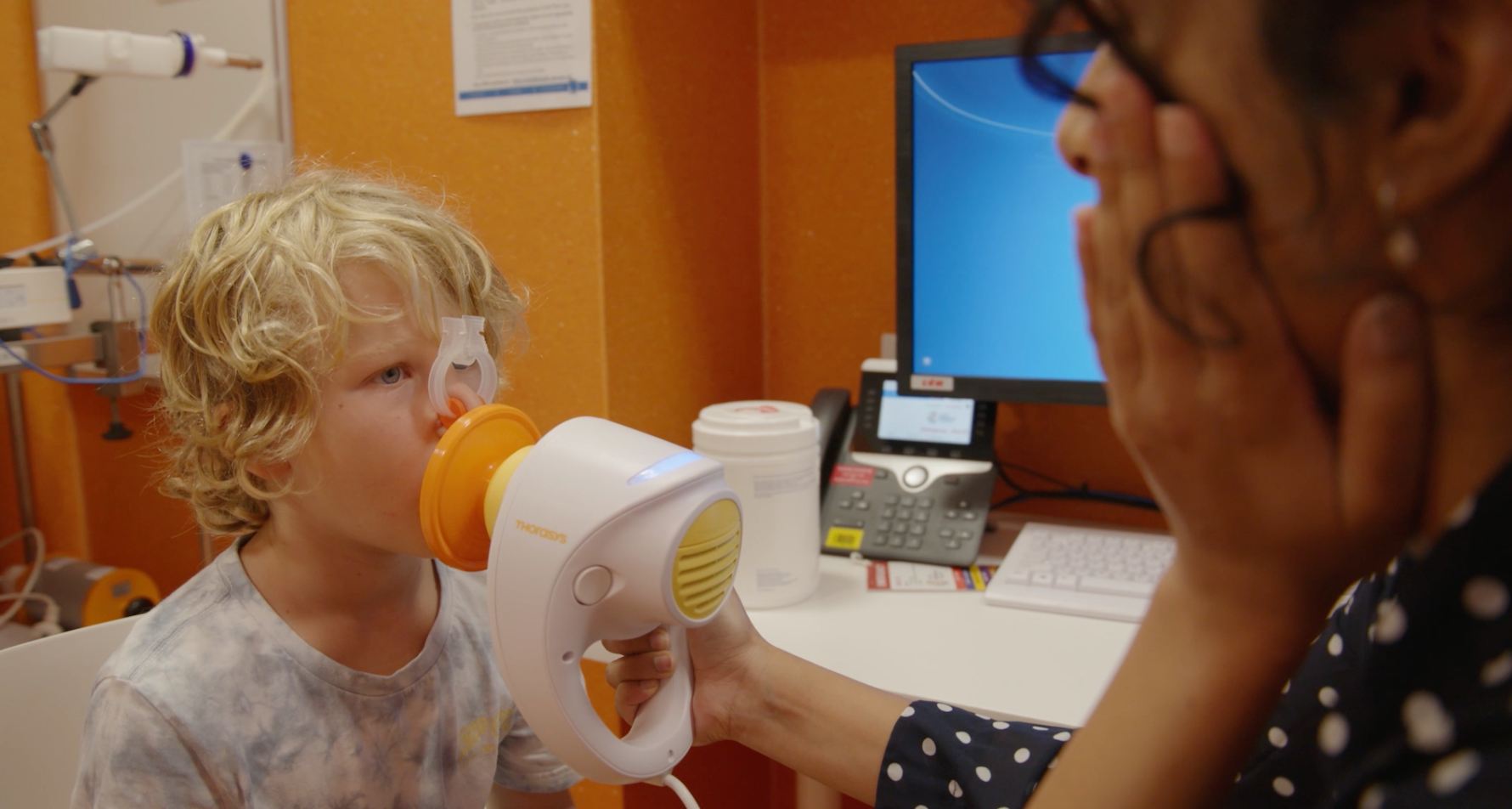
A promising new treatment pioneered in Western Australia for people with cystic fibrosis has commenced testing in a clinical trial in the United States and Australia.
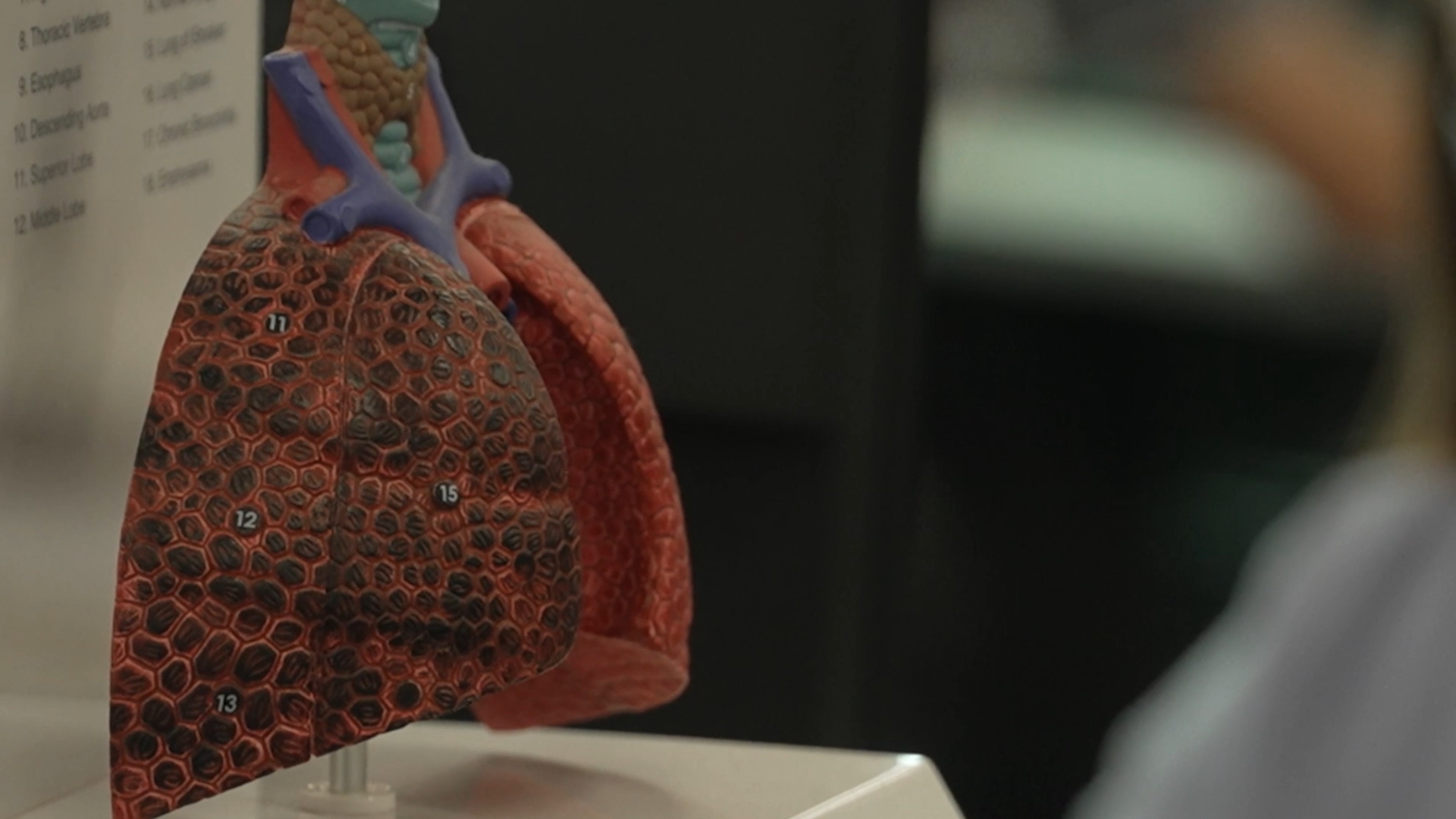
Promising results from an Australian-led clinical trial could drastically change the way we care for young children with cystic fibrosis (CF).
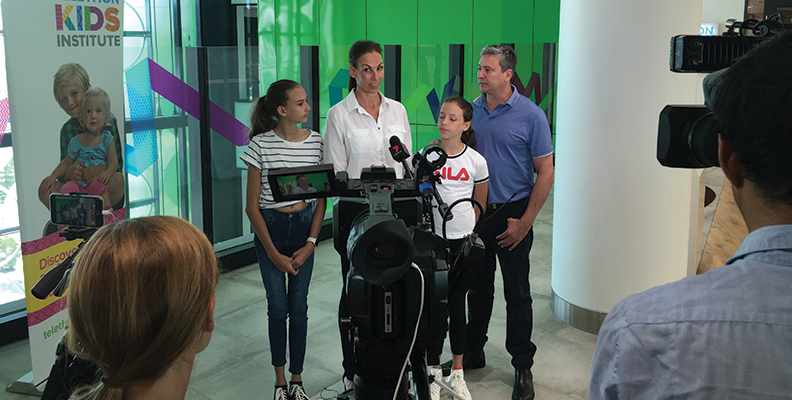
The Kids Research Institute Australia spin-off company, Respirion, received $20 million in funding to develop a promising new therapy.