
Search
The growing global prevalence of autism spectrum disorder is associated with increasing costs for support services. Ascertaining the effects of a successful preemptive intervention for infants showing early behavioral signs of autism on human services budgets is highly policy relevant.
Anxiety commonly co-occurs in autism. Exploring and understanding potential underpinning mechanisms contributing to and maintaining anxiety in the early years is important in managing anxiety. Intolerance of uncertainty (IU), a tendency to find uncertainty difficult, is a transdiagnostic mechanism contributing to anxiety, but little is known about how IU may be experienced in young children on the autism spectrum. This study investigated parental perspectives of children's experiences of uncertainty.
The Repetitive Behaviours Questionnaire for Adults (RBQ-2A) measures two factors of restricted and repetitive behaviours (RRBs) associated with autism. However, the Diagnostic and Statistical Manual of Mental Disorders (DSM-5) provides four criteria for RRBs: repetitive motor behaviours, insistence on sameness, restricted interests, and interest in sensory aspects of the environment (or atypical sensitivity).
Children with congenital heart defects (CHDs) are at higher risk of developing an intellectual disability. However, severity of intellectual disabilities among this group of children are largely unknown. Our objective was to determine the risk of intellectual disability (ID), ID severity, and autism among children with CHDs.
Recent studies have reported that strengths-based programs, leveraging autistic adolescents' abilities and interests, could improve their skills and facilitate social engagement. However, little is known about the long-term impact of strengths-based approaches. This study aimed to explore the long-term outcomes of community strengths-based programs designed to support autistic adolescents in developing interests and skills in Science, Technology, Engineering, Arts, and Mathematics (STEAM) and the factors influencing their participation in these programs.
Early supports to enhance social development in children with autism are widely promoted. While oxytocin has a crucial role in mammalian social development, its potential role as a medication to enhance social development in humans remains unclear.

The MINERvA Network will allow more accurate and precise determination of the contributions of familial and environmental factors to the etiology of autism.

A co-designed digital tool to address anxiety concerns for children on the autism spectrum is set to be developed and trialled in Western Australia.
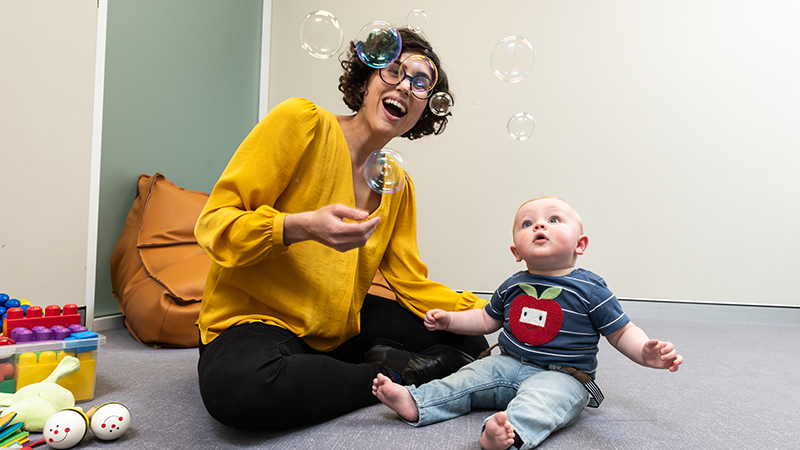
A child-led therapy that supports the social development of babies showing early signs of autism has found a significant reduction in social communication difficulties in babies who received the therapy, according to new research led by CliniKids at The Kids Research Institute Australia.
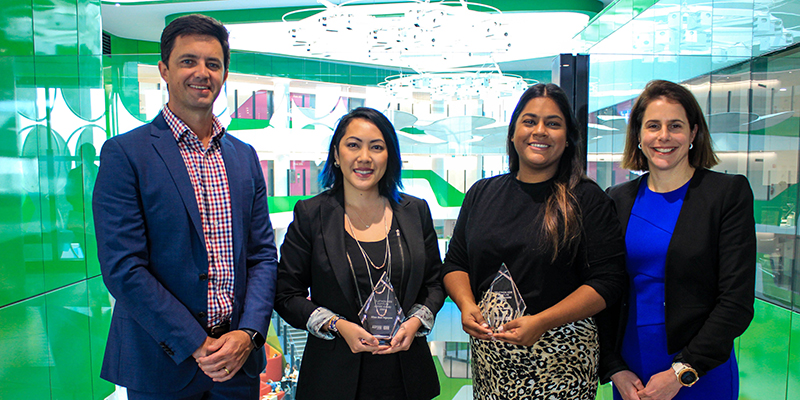
Two of The Kids Research Institute Australia’s best and brightest will share in $10,000 of funding to use for investment in their professional growth through attendance at an international conference, when safe to do so.