
Search
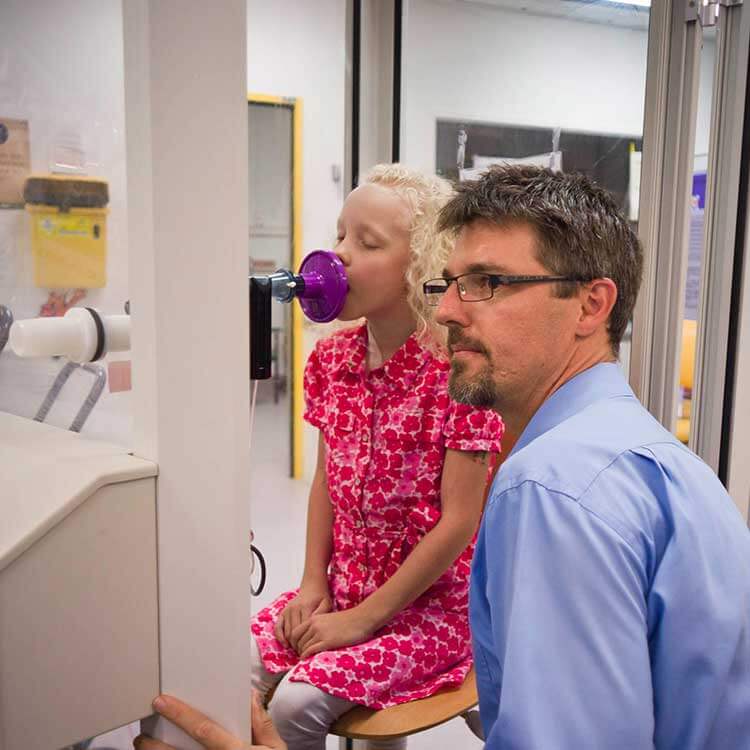
New research from Perth’s The Kids Research Institute Australia shows that babies born premature continue to have lung problems well into childhood.

Join us for our Annual Community Lecture entitled "You Are What You Breathe" with Professor Stephen Holgate.
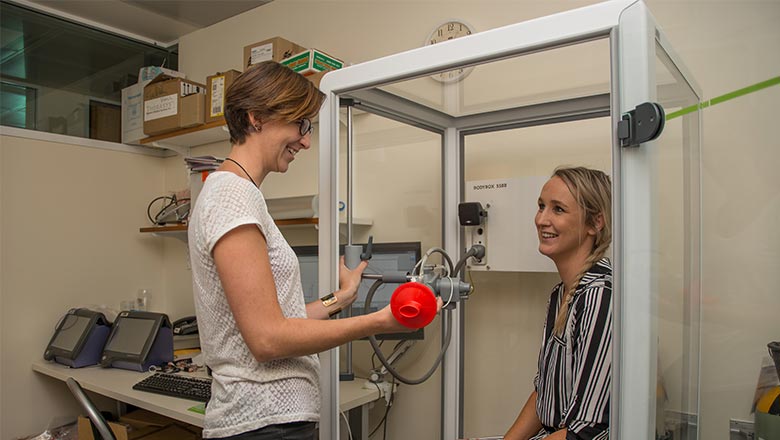
Researchers are urging caution in the use of a widely accepted test for diagnosing asthma, after their study found it may not be accurate in some settings.
Preterm birth is associated with lifelong respiratory sequelae, yet our understanding of lung function trajectories across the lifespan remains limited. We aimed to identify patterns of spirometry development from childhood to early adulthood in survivors of very preterm birth using novel data-driven methods.
Limited evidence suggests that airway epithelial structure and function is disrupted in very preterm infants; however, the epithelial morphology and physiology has not been well characterised following discharge from neonatal intensive care. This study aimed to characterise the nasal airway epithelium from 1-year-old survivors of very preterm birth.
Citation: Evans DJ, D Sly PD, Foster P, Donovan C. Who gets asthma, and why? Med J Aust. 2025;223(S10):S19-S23. Keywords: Asthma; Lung diseases;
People born preterm (<37 weeks’ gestation) have lower peak oxygen consumption (peak VO2), a well-established indicator of long-term health outcomes, compared to term-born peers. However, responses to exercise can vary with exercise mode, which has implications for prognostic assessments.
Despite a high burden of respiratory disease among infants globally, limited options exist for lung function testing in this age group. Tidal breathing techniques such as oscillometry allow for understanding the pathophysiology of diseases that originate early in life, thus providing the opportunity to develop timely prevention and treatment strategies.
Mycobacteroides abscessus (MABS) is within the non-tuberculous mycobacteria family. It inhabits soil and water, exhibits multi-antibiotic resistance and causes opportunistic lung infections, which may progress to symptomatic MABS-pulmonary disease (MABS-PD) associated with substantial morbidity, increased healthcare utilisation, impaired quality of life and increased mortality.
Measurements of maximal voluntary inspiratory (Pi max) and expiratory (Pe max) pressures are used in the management of respiratory muscle disease...