
Search
Ruth Elke Peter Thornton Seppanen Richmond PhD BSc PhD MBBS MRCP(UK) FRACP Co-head, Bacterial Respiratory Infectious Disease Group (BRIDG) Program
Latest news & events at the Wesfarmers Centre of Vaccines & Infectious Diseases.
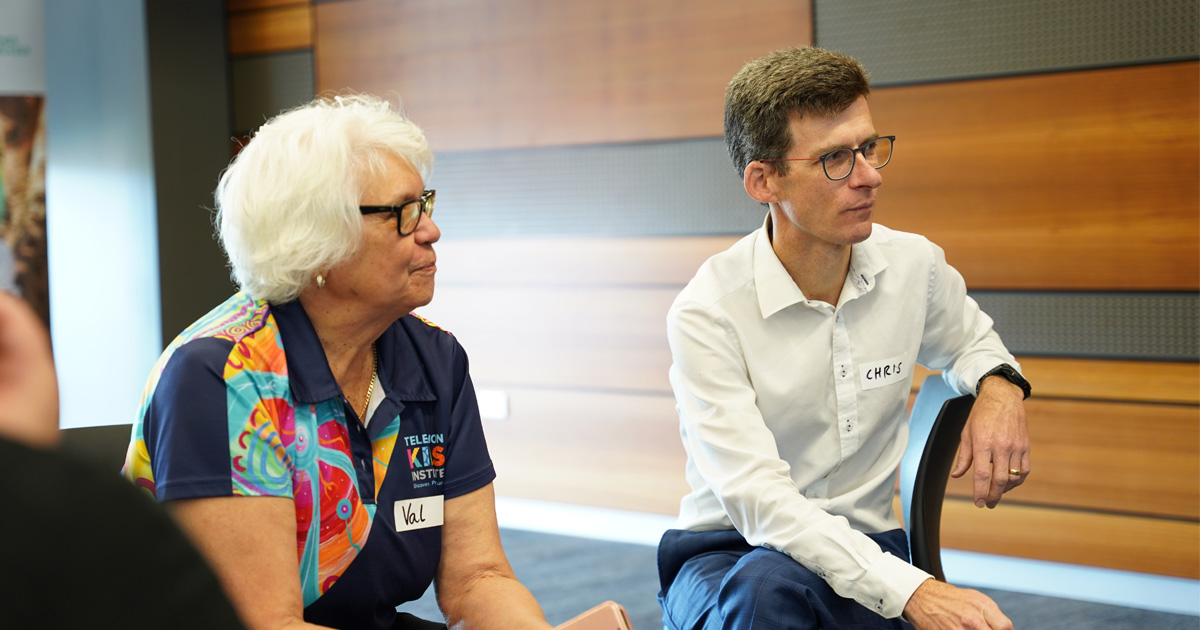
Researchers from the Wesfarmers Centre of Vaccines and Infectious Diseases at The Kids Research Institute Australia have shared their expertise with the community in Cockburn, covering topics ranging from respiratory disease in babies to recurring ear infections in kids.
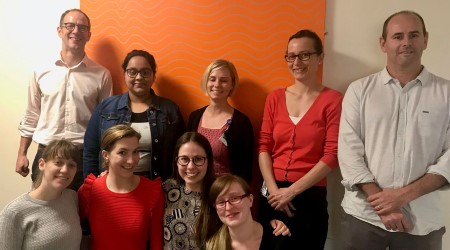
Clinical Professor Tobias Strunk, Dr Andrew Currie and their Neonatal Infection and Immunity Team have become the newest members of the Wesfarmers Centre of Vaccines and Infectious Diseases.
Otitis media with effusion (OME) affects hearing, speech development, and quality of life (QoL) in children. The 'Blow, Breathe, Cough' (BBC) intervention promotes nasal, respiratory, and middle ear clearance through nose blowing, deep breathing, coughing, and hand hygiene. It shows promise in resolving OME but lacks randomized-controlled trial (RCT) evaluation. This paper presents a RCT protocol evaluating BBC's effect on OME resolution, hearing, speech, and QoL in children aged two to seven years.
Otitis media (OM), or middle ear infection, is one of the most common childhood illnesses globally. In Australia, OM remains a leading cause of antibiotic prescriptions in children, despite growing awareness of antimicrobial resistance (AMR) and the need for stewardship. Preventing OM not only reduces the burden of disease but also plays a critical role in curbing unnecessary antibiotic use and slowing the rise of AMR.
Australian First Nations children are at very high risk of early, recurrent, and persistent bacterial otitis media and respiratory tract infection. With the PREVIX randomised controlled trials, we aimed to evaluate the immunogenicity of novel pneumococcal conjugate vaccine (PCV) schedules.
Nontypeable Haemophilus influenzae (NTHi) is the most common bacterial otopathogen associated with otitis media (OM). NTHi persists in biofilms within the middle ears of children with chronic and recurrent OM. Australian Aboriginal children suffer exceptionally high rates of chronic and recurrent OM compared to non-Aboriginal children.
To assess the degree to which timely audiological assessment of congenital hearing loss is achieved at our institution - Perth Children's Hospital, Western Australia, and to review cases which breached this timeframe in order to address barriers to timely assessment. The benchmark used to determine timely assessment is that set out by The Joint Committee on Infant Hearing (JCIH) in which diagnostic audiological testing occurs by three months of age for those who do not pass newborn hearing screening.
Our goal was to identify genetic risk factors for severe otitis media (OM) in Aboriginal Australians.