
Search
Parental support is strongly correlated with protective factors for trans youth yet most experience parental rejection or ambivalence regarding their gender. Many parents report a desire to support their child but indicate lack of understanding and support as key barriers. We aimed to develop a nuanced understanding of the challenges and facilitators experienced by Australian parents in developing understanding, support and acceptance of their child’s gender and their needs to do so.
Parental support is strongly correlated with protective factors for trans youth, however, most experience unsupportive parental attitudes. We aimed to better understand how youth perceive parental reactions to their gender identity disclosure and what they consider to be barriers to, and facilitators of, support.
The mental health and wellbeing of young people has important consequences for students and society. Schools are a logical environment for management and early intervention of wellbeing, mental health and engagement with school. Interventions aimed at improving mental health and wellbeing in education systems requires knowledge of how wellbeing is clustered at a school level. Cluster-randomised trials, and regression analyses of such data also require knowledge of clustering.
The Perth Alexithymia Questionnaire (PAQ) is a 24-item self-report measure of alexithymia. Originally developed in English, it was designed to try to enable more comprehensive (i.e., facet-level and valence-specific) alexithymia assessments. This study aimed to introduce and validate a Polish version of the PAQ. Our sample were 1,008 people (69.44% females, 30.06% males and 0.50% non-binary) aged 18-78 (M = 29.69, SD = 14.15) from the general community.
Early intervention within First Episode Psychosis (FEP) recovery efforts support functional recovery in several ways, including increasing levels of (1) physical activity (2) life skills, and (3) social connectivity. Sport has been proposed as an ideal platform to target these three goals simultaneously.
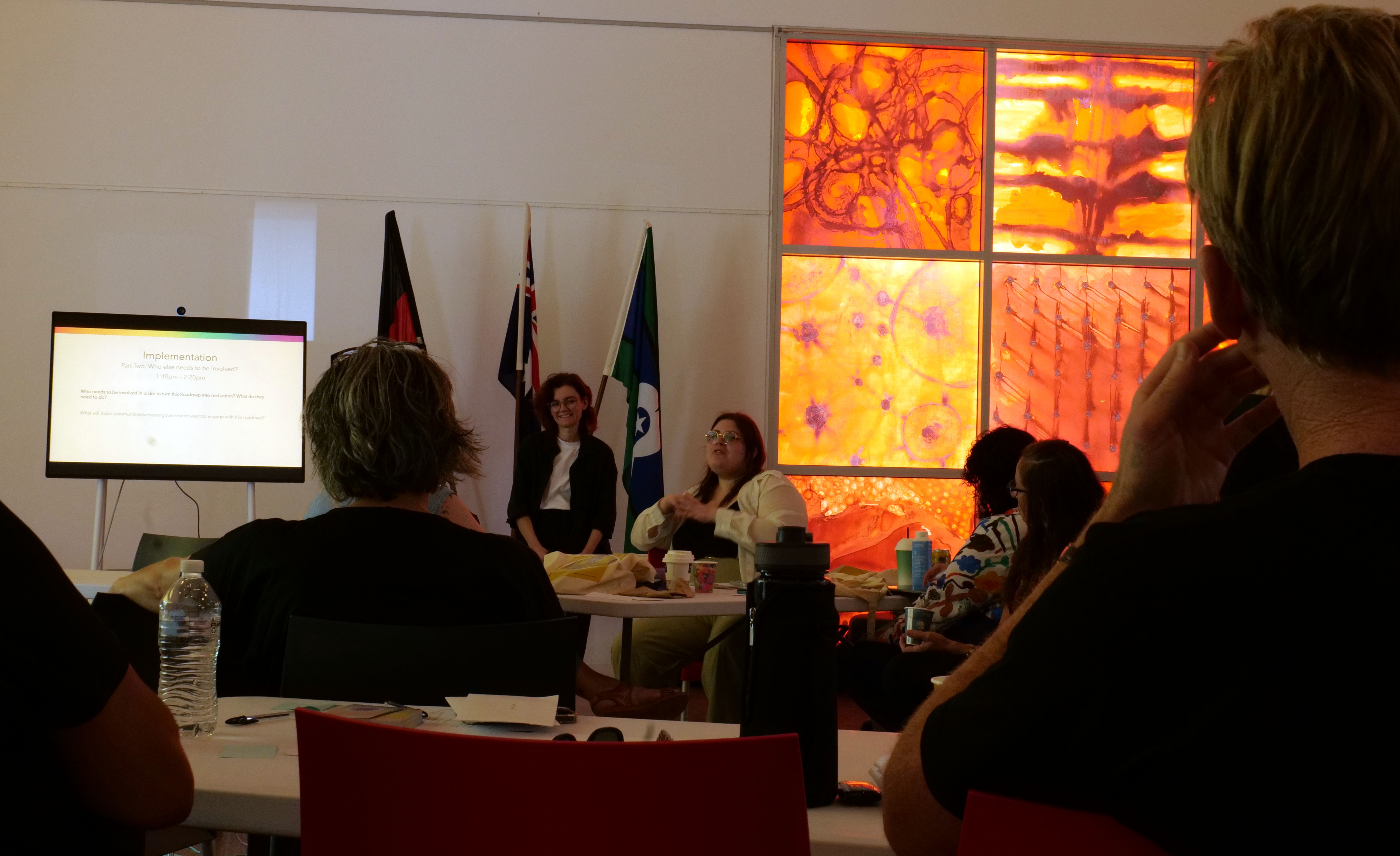
Walkern Katatdjin researcher and lead author Mx Shakara Liddelow-Hunt leads a conversation with the community on the key actions to include in the Roadmap.
Autistic children experience significantly higher rates of anxiety compared to nonautistic children. The precise relations between autism characteristics and anxiety symptoms remain unclear in this population. Previous work has explored associations at the domain level, which involve examining broad categories or clusters of symptoms, rather than the relationships between specific symptoms and/or individual characteristics. We addressed this gap by taking a network approach to understand the shared structure of autism characteristics and anxiety symptoms.
Youth sports programs provide an opportunity to embed mental health and wellbeing programs to reach young people with mental health support. The aims of this study were to (a) examine mental health outcomes from a youth sports program including a mental health program (Life-Fit-Learning) in adolescent boys and girls, and (b) among the larger cohort of adolescent boys, to examine whether partial or full completion of Life-Fit-Learning yielded different outcomes for boys within healthy and high-risk ranges for anxiety, depression and behavioral concerns.
School bullying is a public health concern affecting the physical and mental health of children and young people. While school-based interventions to prevent bullying have been developed internationally, the effectiveness of many interventions has been mixed and modest.
Trans youth are at high risk of mental health difficulties and negative life events. Strong parental support is highly protective however there is little understanding of what factors facilitate the process of parental understanding and acceptance of a child’s gender identity.