
Reports and Findings
24-hour Movement Guidelines for the Early Years promote that achieving all three-movement behaviour (sleep, sedentary behaviour and physical activity) recommendations is important for child health and development. We examined the association between meeting all, none and combinations of the Australian 24-Hour Movement Guidelines for the Early Years and social-emotional development in 1363 preschool (2-5 years) boys (52%) and girls.
In this paper, we aim to contribute to the understanding of the multidimensional nature of school readiness. In a sample of over 4,000 Australian children in their first year of school, we used latent class analysis to examine patterns of school readiness based on child, family, school and community characteristics, and examine the relationship between these patterns of school readiness and subsequent outcomes (reading comprehension, school absence and emotional and behavioural difficulties).
Pneumonia is a leading cause of childhood mortality with Streptococcus pneumoniae a major contributor. Pneumococcal conjugate vaccines (PCVs) have been introduced into immunisation programs in many low- to middle-income countries yet there is a paucity of data evaluating the effectiveness in these settings. We assess the effectiveness of 13-valent PCV against hypoxic pneumonia, hospitalisation and other clinical endpoints in children <5 years living in Eastern Highlands Province, Papua New Guinea).
Christopher Blyth MBBS (Hons) DCH FRACP FRCPA PhD Centre Head, Wesfarmers Centre of Vaccines and Infectious Diseases; Co-Head, Infectious Diseases Epidemiology, Wesfarmers Centre of Vaccines and Infectious Diseases, Honorary and NHMRC Emerging
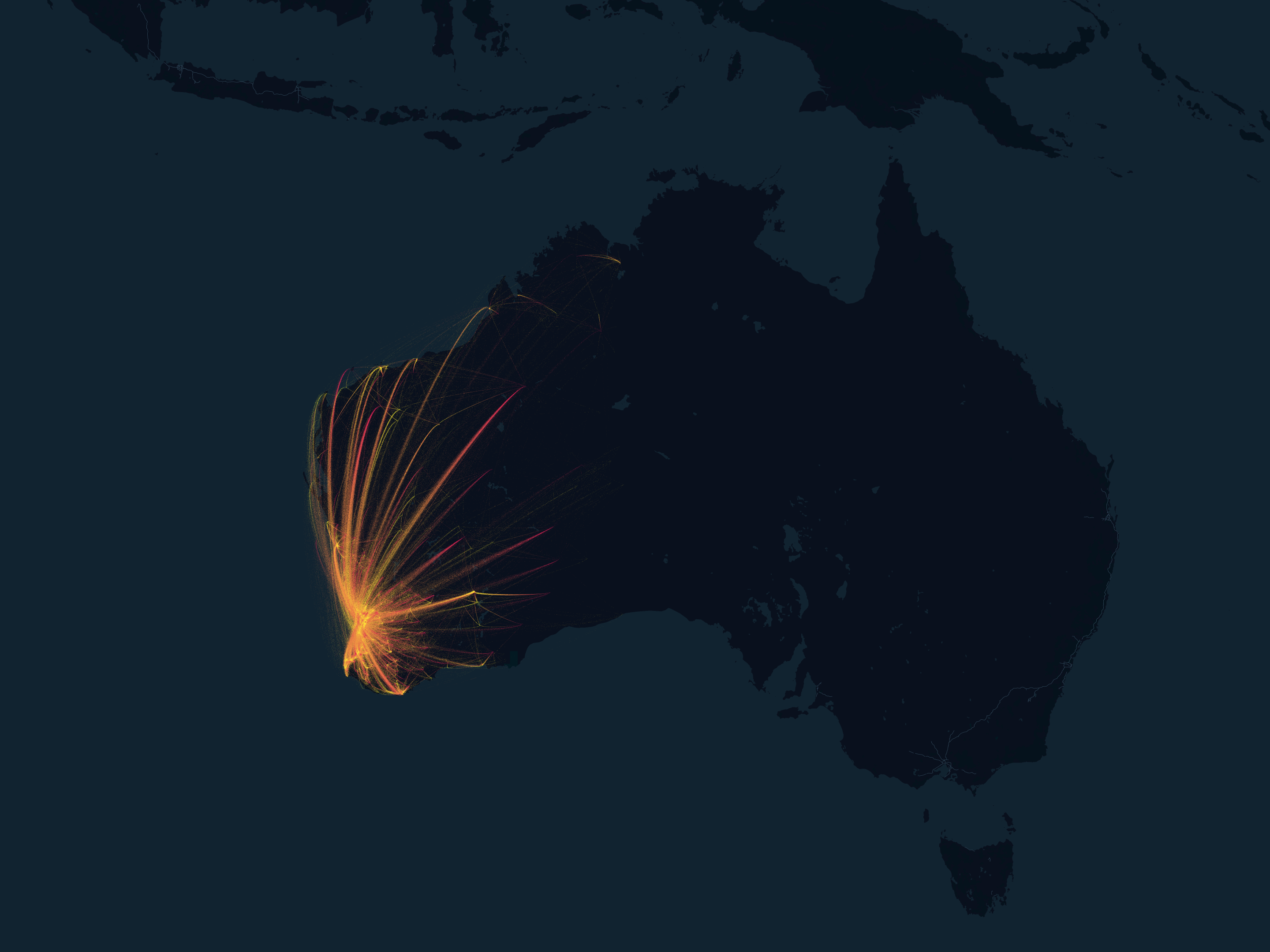
Researchers have developed a new model for simulating covid-19 outbreaks in Western Australia.
Christopher Asha André Dr Anita Blyth Bowen Schultz Campbell MBBS (Hons) DCH FRACP FRCPA PhD BA MBBS DCH FRACP PhD GAICD FAHMS OAM MBChB, PhD, FRACP MBBS, DCH, PG DipPID, FRACP, PhD Centre Head, Wesfarmers Centre of Vaccines and Infectious Diseases;
Recently, we identified a Staphylococcus aureus sequence type 5 (ST5) clone in northern Australia with discrepant trimethoprim-sulfamethoxazole (SXT) susceptibility results. We aimed to identify isolates of this clone using Vitek 2 SXT resistance as a proxy and to compare its epidemiology with those of other circulating S. aureus strains. We collated Vitek 2 susceptibility data for S. aureus isolates collected through our laboratory and conducted a prospective, case-control study comparing clinical, microbiological, epidemiological, and genomic data for subsets of isolates reported as SXT resistant (cases) and SXT susceptible (controls) by Vitek 2.
Impetigo, a bacterial infection caused by Streptococcus pyogenes and S. aureus of the superficial dermis affects up to 162 million children at any one time. Three out of every five school-children in Samoa have active or recently healed impetigo, far higher than the global median impetigo prevalence surpassing previous estimates for the Oceania region.
The biological determinants of the response to immune checkpoint blockade (ICB) in cancer remain incompletely understood. Little is known about dynamic biological events that underpin therapeutic efficacy due to the inability to frequently sample tumours in patients.
This chapter outlines the evidence and evolution of RHD control programs and draws conclusions about priorities following the 2018 World Health Organization Global Resolution on rheumatic fever and RHD.